In February, we were contacted by a recycling company based in Singapore, regarding a project focused on processing compressed aluminum scrap bales.
The customer's goal was clear: to efficiently break down tightly packed aluminum bales, separate impurities, and recover clean aluminum for further processing.
Project Background
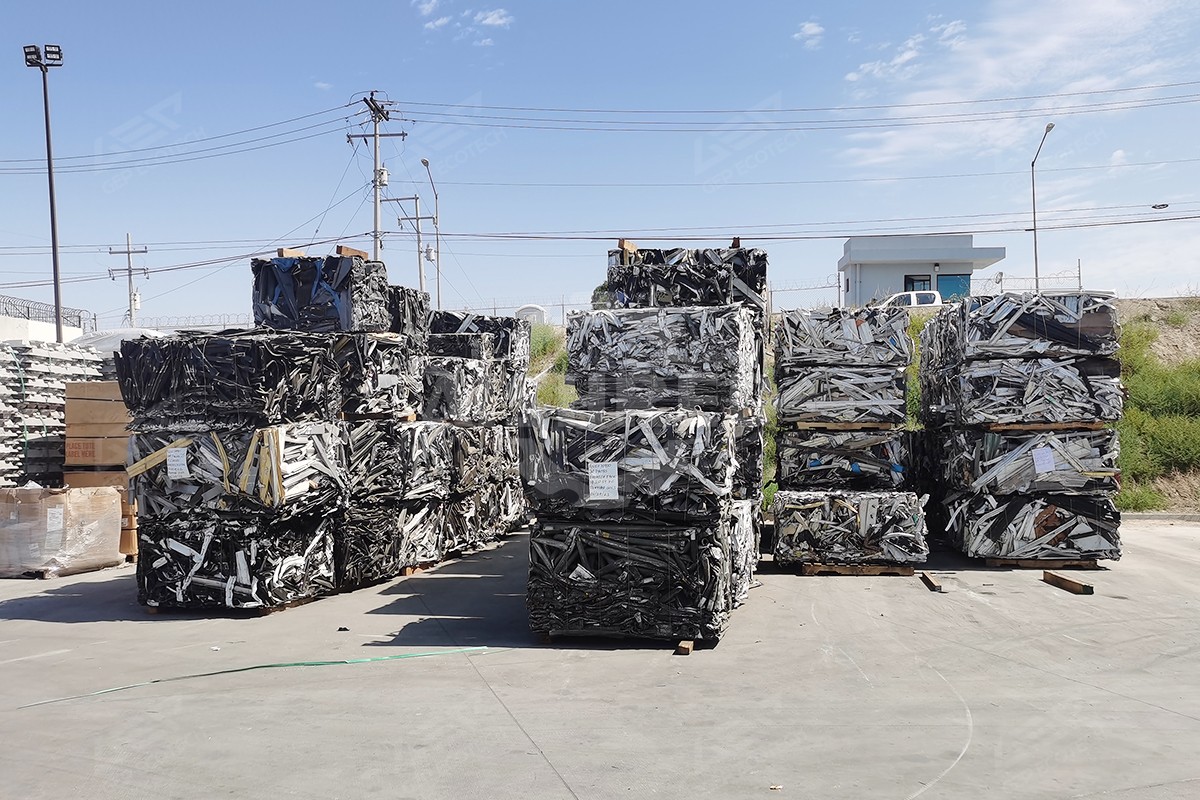
The material mainly consists of compacted aluminum scrap in bale form. These bales are dense, irregular, and often contain contaminants such as plastics, light metals, and occasionally ferrous materials.
The customer required a system that could:
- Open and shred aluminum bales effectively
- Ensure stable operation under continuous load
- Achieve efficient separation of aluminum and impurities
- Reach a processing capacity of approximately 8 tons per hour
GEP ECOTECH Customized Solution
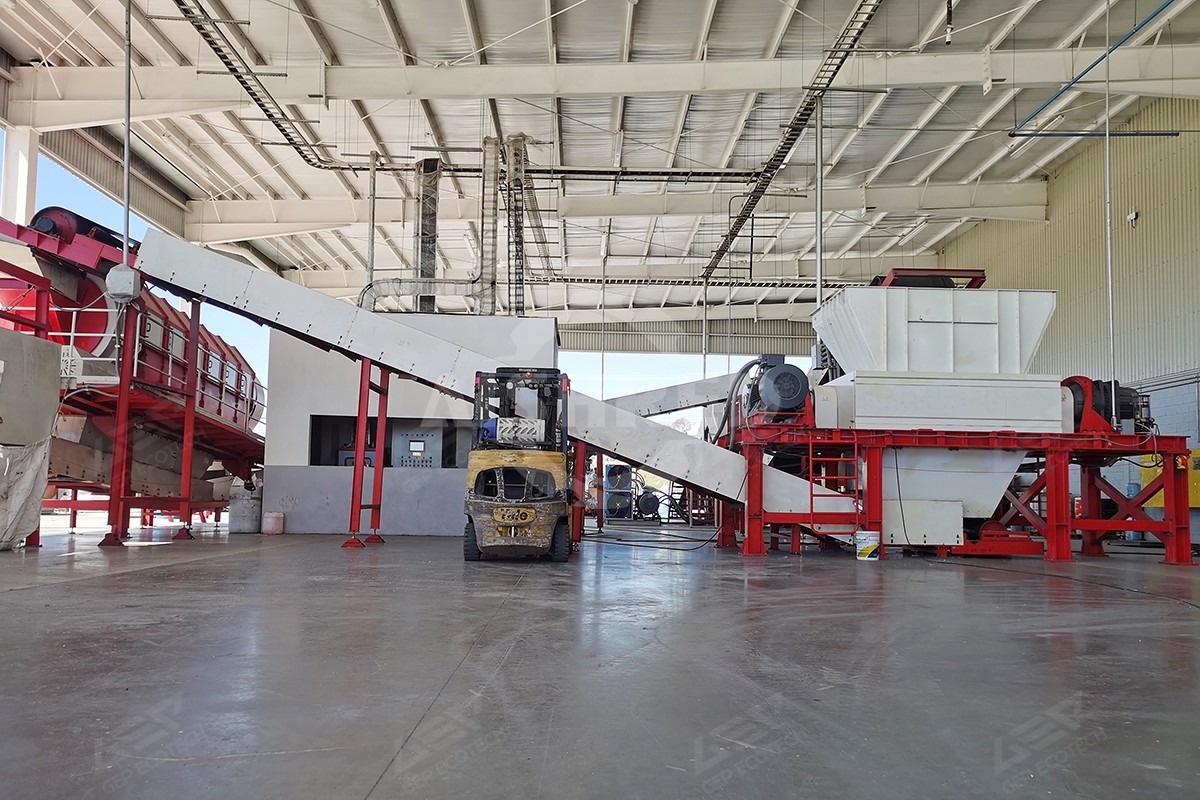
Based on the material characteristics and capacity requirement, we proposed a complete recycling solution combining shredding and separation technologies.
The system configuration includes:
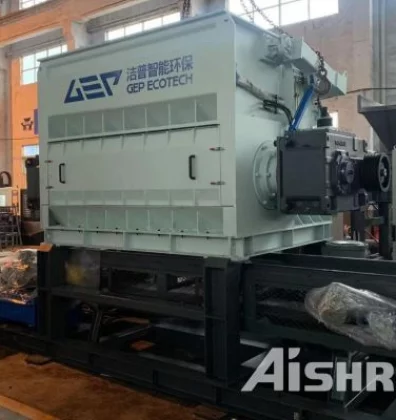
- GC12 pre-shredder for initial bale breaking
- GD13Q double-shaft shredder for further size reduction
- Eddy current separator for non-ferrous metal recovery
- Magnetic separator for ferrous removal
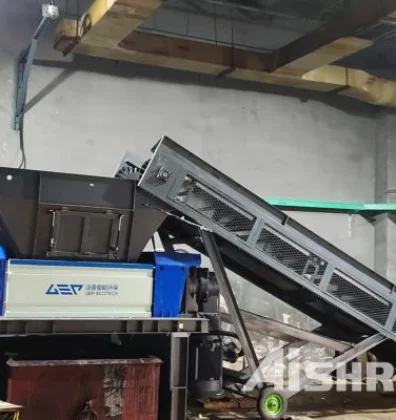
- Belt conveyor system for smooth material transfer
- Centralized control system for automated operation
This setup allows the material to be gradually processed from large compact bales into smaller, more uniform pieces, making downstream separation more efficient.
Key Design Considerations
During our discussions, the customer highlighted concerns about the difficulty of handling dense aluminum bales. To address this, we designed a two-stage shredding process:
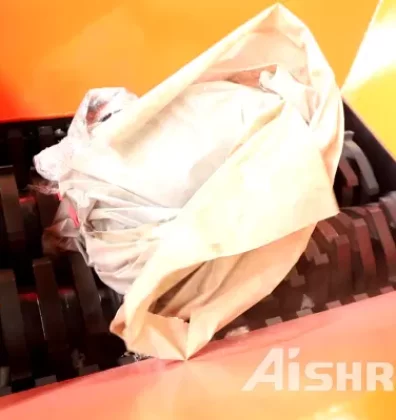
- The GC12 unit focuses on loosening and opening the compressed bales
- The GD13Q shredder ensures consistent particle size for optimal separation
In addition, the integration of both magnetic and eddy current separation ensures maximum recovery of valuable metals while minimizing impurities.
Customer Feedback
After reviewing the technical proposal and layout, the customer responded positively, especially noting:
- The practicality of the two-stage shredding design
- The completeness of the system, including separation and conveying
- The expected improvement in aluminum recovery rate
They also appreciated that the system is designed with automation in mind, which helps reduce labor cost and improve operational efficiency.