Explore GEP ECOTECH for the Latest Updates on Our Developments
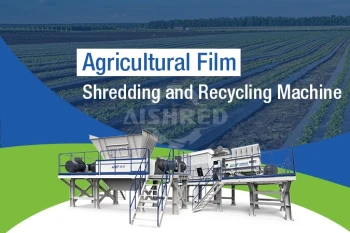
Over the past decades, the use of agricultural films has continued to increase and shows a long-term upward trend. Growing…
Jan 27, 2026
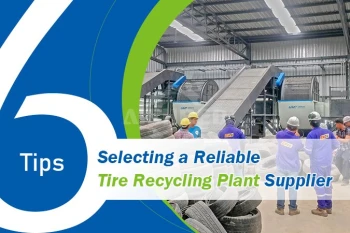
In the tire recycling industry, waste tires hold tremendous value—they represent not only an environmental challenge but also a…
Aug 30, 2025
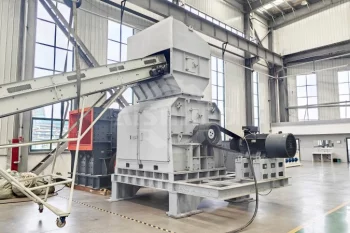
GEP ECOTECH proudly announces the launch of its next-generation waste wood shredder, an advanced machine engineered to meet the…
May 19, 2025
The traditional RDF (Refuse-Derived Fuel) production process mainly relies on heavy-duty single shaft shredders for shredding…
Mar 24, 2025
Scrap Aluminum Shredder is a kind of shredding equipment used to process scrap aluminum, which is mainly used for the shredding…
Nov 29, 2024
Many people are looking for hazardous waste disposal companies or hazardous waste disposal sites near them. GEP ECOTECH has…
Nov 19, 2024
With the continued advancement of the trade-in policy for household appliances, the demand for recycling and processing of waste refrigerators is growing rapidly. How to efficiently and compliantly convert waste refrigerators into reusable renewable resources has become a key concern in the industry. We provide…
With the rapid development of coconut shell activated carbon production, biomass carbonization, and carbon material industries, more companies are looking for suitable coconut shell preprocessing equipment.Coconut shells feature high hardness, strong toughness, and high density, making direct feeding into…
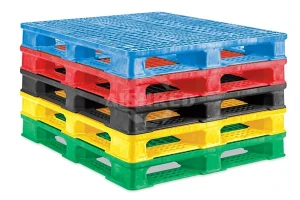
Plastic pallets are indispensable in modern logistics, offering superior durability, hygiene, and resistance to moisture, chemicals, and pests. But when they reach the end of their useful life, efficient shredding is the key to unlocking their recycling value. This article explores what a 1 TPH plastic pallet fine…
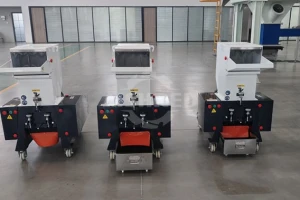
This compact plastic crusher is designed for on‑site recycling of PET/HDPE bottles and soft plastic scraps. It features anti‑wrapping V‑rotor, non‑bounce hopper, 5‑minute quick cleaning, mobile casters, and dust‑free discharge. Instantly converts waste into uniform flakes, cutting handling and procurement costs.
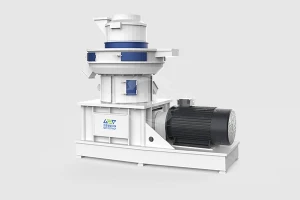
This article introduces biomass pellet machines that turn agricultural residues, sawdust, straw and wood waste into high-density fuel pellets without chemical binders. It covers raw material requirements, the full production workflow including crushing, drying, pelleting and cooling, key equipment benefits, core…
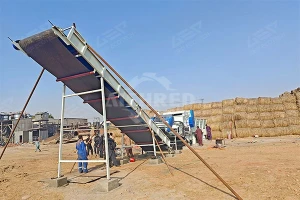
Agricultural residues such as rice straw, wheat straw, corn stalks, and sugarcane bagasse are increasingly being utilized as renewable biomass resources. To maximize their value in biomass power generation, pellet production, and biofuel manufacturing, these materials must first be processed into uniform-sized…
As vehicle recycling volumes continue to increase worldwide, automotive dismantling facilities are faced with growing quantities of interior waste, including seats, carpets, headliners, door panels, dashboards, foam padding, and mixed textile-plastic composites. These materials are difficult to recycle through…
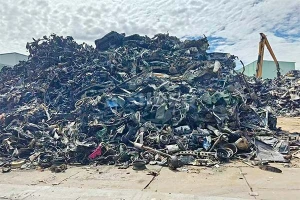
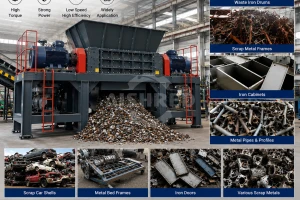
The dual-shaft shredder is a critical piece of equipment in the scrap iron recycling industry, widely used for processing various ferrous materials including end-of-life vehicles, metal briquettes, steel sheets, and metal turnings. This article compiles a series of real on-site operation videos to demonstrate the…
The generation of construction waste increases year by year. How to efficiently dispose of it and achieve resource utilization has become a focal point in the industry. GEP ECOTECH, targeting the characteristics of construction waste, provides a complete process flow from raw material pretreatment to finished…
Discover how wind sifters improve construction and demolition waste recycling by removing plastics, films, and light debris from heavy aggregates. Suitable for 20+ TPH C&D waste processing plants.
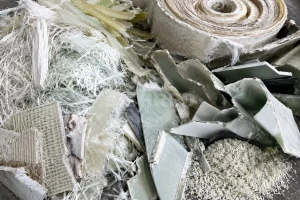
With the widespread use of fiberglass materials in construction, automotive, wind turbine blades, composites, and other industries, significant amounts of production waste—such as offcuts, edge trim, and non-conforming products—are generated. This waste not only occupies valuable storage space but also increases…
With the rapid growth of global wind power installations, an increasing number of wind turbine blades are entering their retirement cycle. Over the next decade, retired wind turbine blades will face a peak period of centralized disposal. As blades are made of high-strength composite materials, traditional landfill and…
Municipal Solid Waste (MSW) is one of the fastest-growing environmental challenges worldwide. Landfills not only occupy valuable land but also contaminate soil and groundwater while emitting greenhouse gases. However, within this waste lies a valuable resource. By converting MSW into Refuse-Derived Fuel (RDF) pellets…
In recent years, international policies have shifted from measuring simple "recycling rates" to a broader "resource utilization rate" , with targets reaching 60% by 2026 in many regions.At the same time, carbon peak and neutrality commitments are pushing waste intensive sectors to reduce CO₂ emissions through…
GEP ECOTECH successfully supplied a mobile crushing plant for a mining project in Nigeria, providing the customer with an efficient and flexible solution for hard rock crushing and aggregate production. The project was designed to meet the customer's requirements for high mobility, stable production capacity, and…
During landscaping renovations and forestry logging cleanup, how should we handle massive, rock-hard tree stumps and roots? Traditional shredding equipment often struggles with hard materials, requires frequent blade repairs, generates excessive noise, and demands constant downtime for maintenance. This has long been…
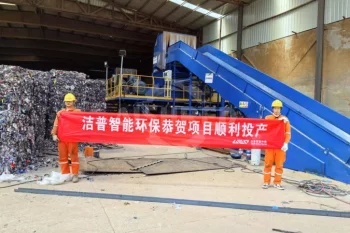
By the end of 2025, an environmental technology company in Egypt put a production line into operation. Its mission was clear: separate combustibles from construction waste and turn them into alternative fuel. The output of 3-5 tons per hour is not huge, but this project is worth paying attention to because it solves…
Truck and Bus Radial (TBR) tires are among the most challenging waste streams to recycle. Larger, heavier, and reinforced with thick steel beads and multiple layers of fiber, they demand robust equipment and smart processing. Yet, they also hold significant value: high‑grade rubber, clean steel, and even textile…
In recent years, the resource utilization of waste tires has become a hot topic in the environmental protection industry. Waste tires have high recycling value—they can be retreaded and reused, have their steel wires recovered for steelmaking, be ground into rubber powder, be pyrolyzed for oil, or be used as…
Plastic waste recycling isn't optional—it's essential. Every year, millions of tons of plastic waste end up in our oceans and landfills, threatening wildlife and contaminating our food chain. Recycling plastic reduces reliance on fossil fuels, cuts carbon emissions, and transforms waste into valuable raw materials for…
For places such as supermarkets, farmers' markets, hotels, and restaurants that generate fruit and vegetable waste every day, the problems of limited space, small disposal volume, and the need to dispose of waste as quickly as possible have always been headache issues. To address this demand, GEP ECOTECH has launched…
Client Name: A large bioenergy company in the PhilippinesClient Requirements: Processing approximately 200 tons of various organic raw materials per day, including livestock manure (pig and cattle), bagasse, crop straw, coconut fiber, banana stalks, etc., requiring the finest possible particles for use in a biogas…
As cities move toward zero-waste goals, waste plastic recycling has become a critical part of the circular economy. However, in chemical recycling processes such as pyrolysis and depolymerization, pre-shredding performance often determines the overall project efficiency.Inconsistent particle size, excessive impurities…
In industries such as mechanical processing, electronics manufacturing, and automotive repair, a large quantity of small metal parts—screws, nuts, springs, small stamped parts, electronic connectors, copper contacts, etc.—are generated every day. These parts are small in size, irregular in shape, and often mixed with…