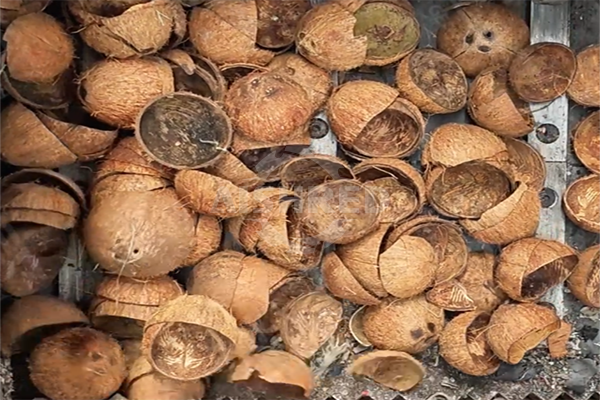
The main components of coconut shells are cellulose and lignin. The high lignin content makes the fibers extremely firmly bonded, which is the fundamental reason why coconut shells are hard in texture and high in toughness. This characteristic makes coconut shells unsuitable for natural degradation, but at the same time gives them unique value as an industrial raw material.
At present, coconut shells mainly have three resource utilization directions: after carbonization and activation, coconut shells are made into activated carbon with well-developed micropores, used for water purification, gold recovery, and electrode materials for supercapacitors; through pyrolysis or direct combustion, coconut shells are converted into biochar, bio-oil, combustible gas, or directly used as alternative fuel for biomass power plants; after treatment, coconut shells can be used as fiber materials and composite materials, for making mattresses, building boards, horticultural cultivation substrates, and filler and reinforcing materials for biodegradable plastics.
Regardless of which route is selected, before coconut shells enter the core processing equipment, they face the same problem: raw coconut shells are large in size, irregular in shape, and high in hardness; direct feeding will cause uneven heating, blockage, or increased wear of subsequent equipment. Therefore, the pretreatment is an indispensable front-end step in the entire recycling process.
Core Requirements of Pretreatment: What Specification Should Coconut Shells Be Granulated to?
Different downstream processes have clear requirements for the granulated particle size of coconut shells:
Activated carbon carbonization: coconut shells need to be ground to 3–10 mm particles or 2–3 cm flakes
Biomass fuel/power generation: coconut shells need to be granulated to 10–30 mm
Fiber extraction: coconut shells need to be first softened, shredded, and granulated, with specific requirements for the final morphology
Soil improvement/horticultural substrate: coconut shells need to be granulated to 20–50 mm
Uneven particle size is the most common problem in pretreatment. If the size of granulated coconut shells varies too greatly, fine particles in the carbonization furnace will be over-carbonized while large particles will be under-carbonized, directly affecting the iodine value and strength of the finished activated carbon. Therefore, the core task of the shredding equipment is to provide a uniform and controllable discharge particle size.
GEP ECOTECH Coconut Shell Pretreatment Equipment Solution: Double-Shaft Shredder Primary Shredding + Hammer Mill Fine Granulating
Whole coconut shells have high hardness. Directly using a high-speed Hammer mill will cause rapid wear of the hammers, and at the same time, because coconut shells are irregular in shape, unstable feeding easily leads to material blockage. In view of the material characteristics of coconut shells, GEP ECOTECH provides a complete equipment combination from pre-shredding to fine granulating.
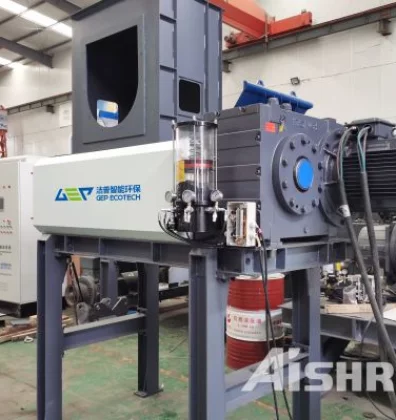
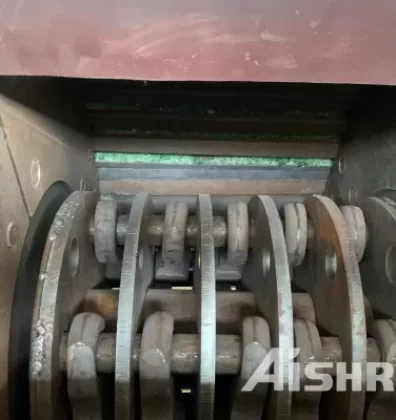
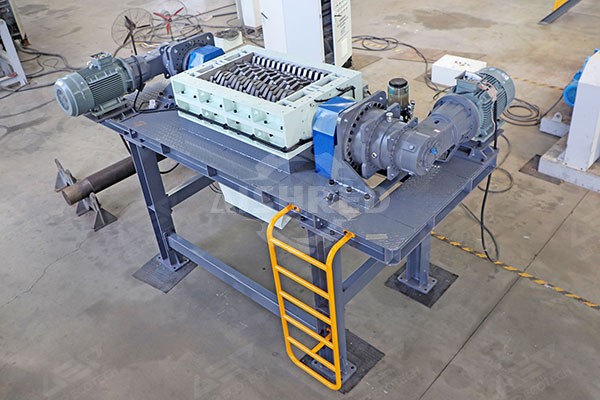
First stage: Double-shaft shredder pre-shredding. The GD Series Double-Shaft Shredder adopts a low-speed, high-torque shear shredding method. Through two sets of relatively rotating cutter shafts, coconut shells are torn, squeezed, and sheared. This shredding method has good adaptability to whole coconut shells, half shells, and coconut shells mixed with a small amount of impurities. The discharge size is usually controlled at 50–200 mm, providing uniform intermediate material for subsequent fine granulating or direct carbonization. In response to the hardness and toughness of coconut shells, the GD series double-shaft shredder uses imported alloy steel for its cutters, which have good wear resistance and impact resistance, and can be repaired by surfacing welding for repeated use, with low maintenance cost and convenient maintenance.
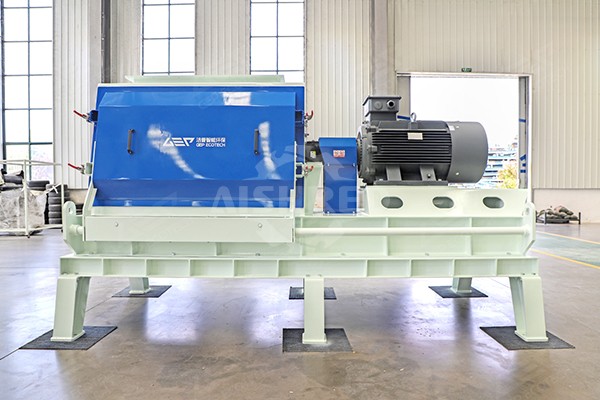
Second stage: The coconut shell particles after pre-shredding enter the GXB series Hammer mill to be further processed to the target particle size. The GXB Series Hammer Mill is equipped with a high-inertia rotor and a large-area screen. By changing the screen aperture, the discharge size can be adjusted (10 mm, 20 mm, 30 mm, etc.), meeting different downstream requirements such as carbonization and fuel preparation, and suitable for different application scenarios with relatively strict particle size requirements.
The advantage of this combined process from GEP ECOTECH is that: in the pre-shredding stage, low-speed shearing replaces high-speed impact, greatly reducing cutter wear and dust generation; the fine granulating stage is carried out on the basis that the material has already been homogenized, resulting in high granulating efficiency and uniform discharge. At the same time, GEP ECOTECH shredding equipment is equipped with an intelligent control system, supporting remote monitoring and diagnosis, capable of real-time monitoring of equipment operating status, realizing fault warning and linkage control, reducing unplanned downtime, and lowering the impact of maintenance downtime on continuous production.
If you are planning a coconut shell recycling and utilization project and need to select pretreatment equipment according to specific raw material characteristics and target products, you are welcome to contact the GEP ECOTECH technical team to obtain customized shredding solutions and equipment selection recommendations. We can also arrange material trial operation to verify on actual equipment whether the granulating effect and discharge particle size meet your process requirements.