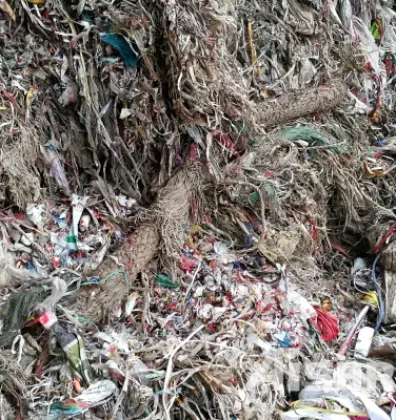
In the field of straw resource utilization (such as power generation, pulping, fertilizer production, fuel briquetting, etc.), suitable and reliable pre-crushing is a crucial step. Twin-shaft shredders and hammer mills are two mainstream equipment types, with distinct working principles, applicable scenarios, and performance characteristics. Scientific equipment selection is essential to ensure stable production line operation and control energy consumption and costs.
This article provides a professional comparative analysis of these two types of equipment from five dimensions: throughput, output particle size, power consumption, core strengths.
1. Equipment Working Principle
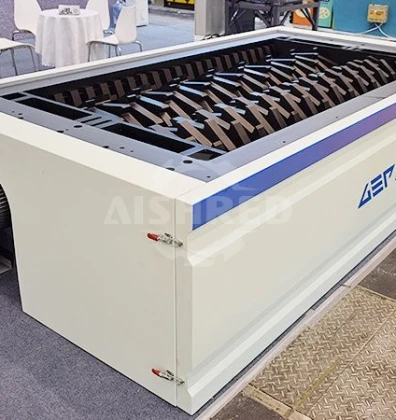
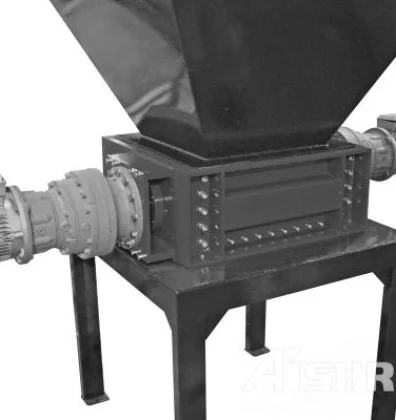
Twin-Shaft Shredder Working Principle: Utilizes two low-speed, high-torque shafts rotating in opposite directions. Hooks on the shafts shear, tear, and pull the material. In essence, it is a "slow and meticulous" tearing machine.
Hammer Mill Working Principle: A high-speed rotating rotor drives hinged hammers to impact and pound the material until it passes through a bottom screen. In essence, it is a "violent" impact machine.
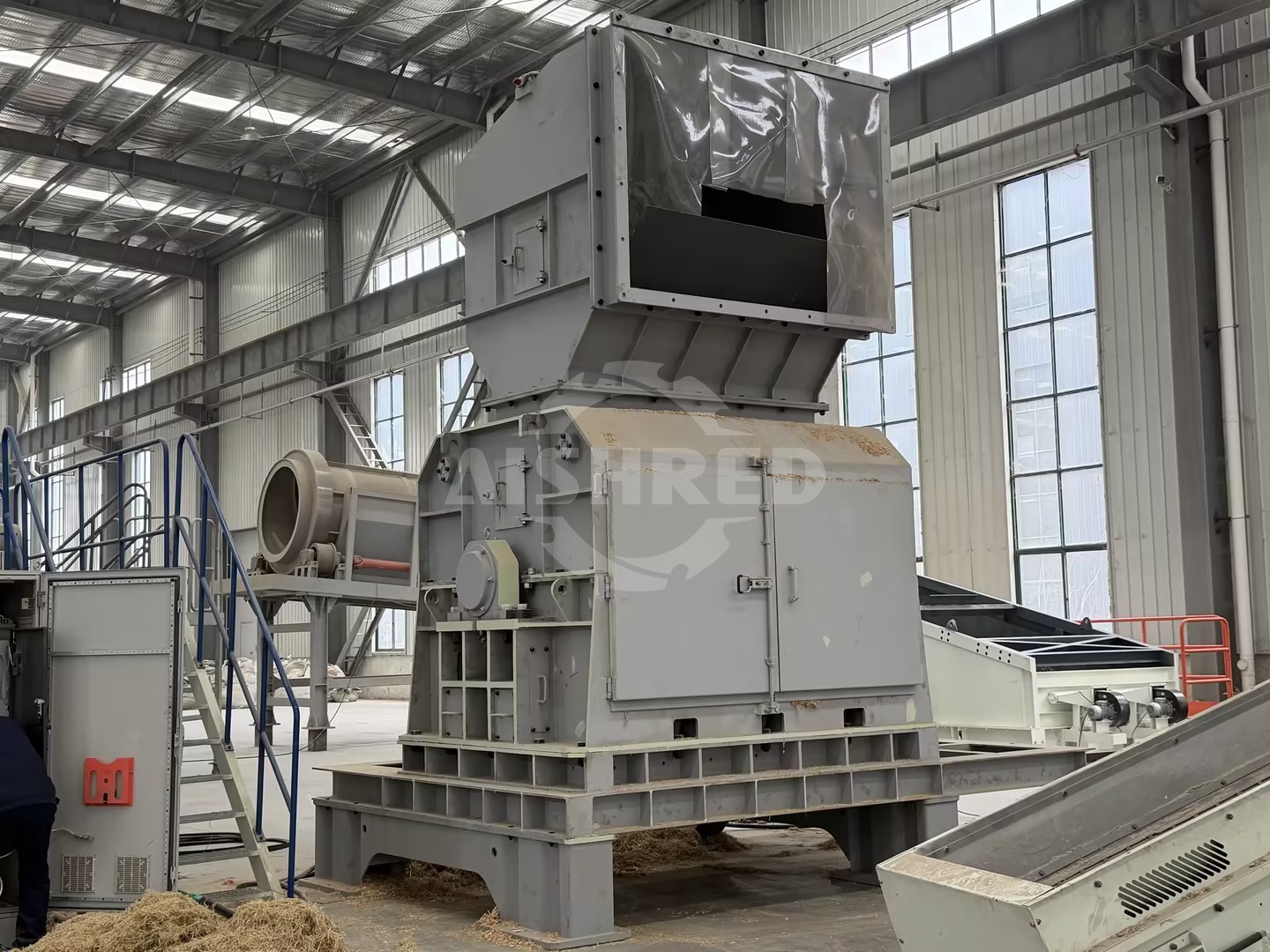
2. Comprehensive Performance Comparison
| Comparison Dimension | Twin-Shaft Shredder | Hammer Mill |
| Throughput | 10-60 t/h, stable throughput, strong overload resistance, suitable for continuous large-scale operations. | 3-16 t/h, high-speed impact provides fast processing. |
| Output Characteristics | Around 50mm ~ 200mm, for primary size reduction. | <50mm, primarily powder and irregular small fragments, depending on screen aperture. |
| Power Consumption | Low power consumption. Low speed and high torque focus energy on effective work through shearing, resulting in low energy consumption per unit output. | Slightly higher power consumption at the same throughput. Significant energy is consumed by high-speed hammer rotation, air turbulence, and inefficient repeated impacts, leading to high energy consumption per unit output. |
| Main Advantages | 1. Low speed, low wear: Low tool and equipment wear, long service life. 2. Low noise, low dust: Operator-friendly working environment. 3. Strong anti-wrapping capability: Particularly suitable for handling fibrous, easily tangled straw (e.g., rice straw). 4. Strong overload protection: Automatic reversal when encountering hard objects, high reliability. | 1. Wide application range: Can handle not only straw but also other biomass and even mixed materials. 2. High reduction ratio: Can reduce material to a smaller size in a single pass. 3. Low cost: Typically lower initial equipment investment. |
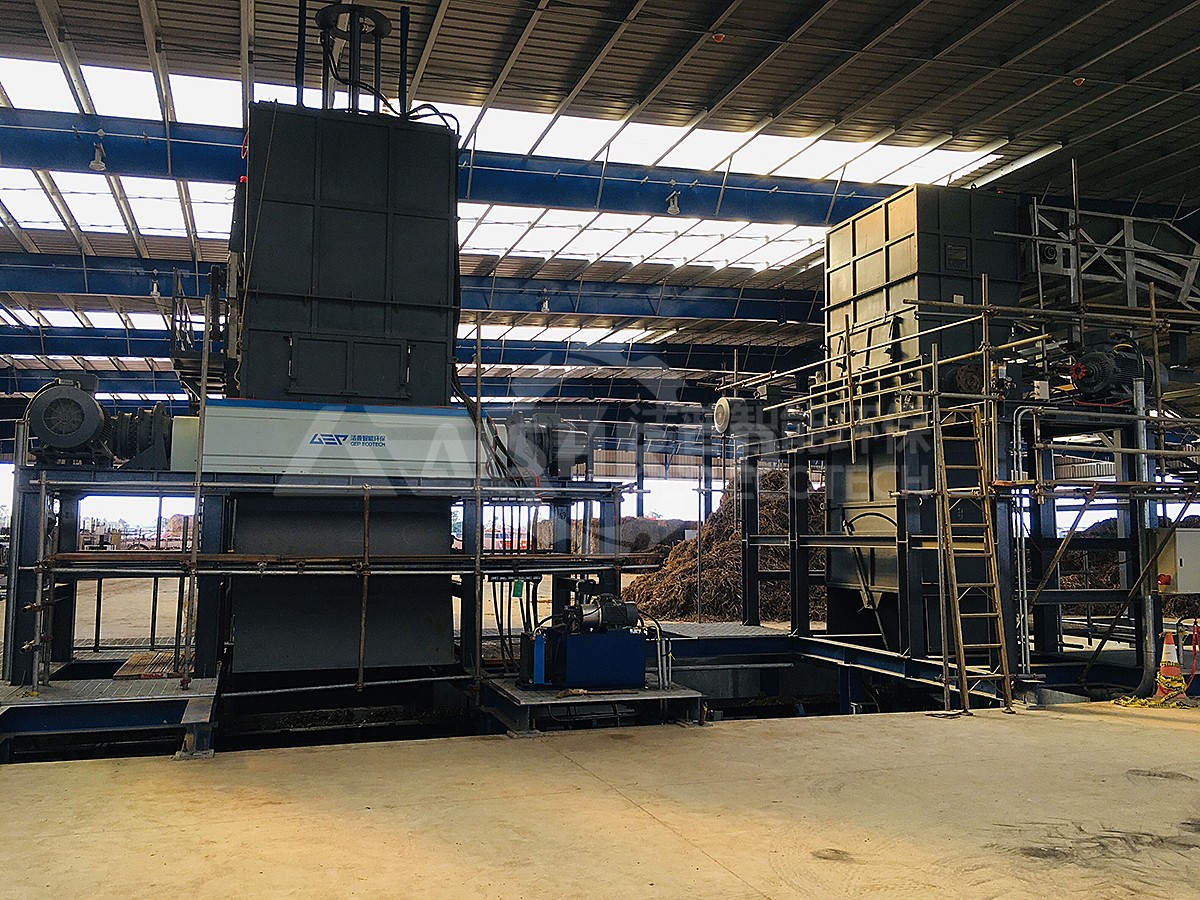
As straw resource utilization moves towards refinement and large-scale production, twin-shaft shredders are becoming the preferred choice for large-scale projects due to their low energy consumption, stability, uniform output, and strong adaptability. While comprehensive crushers remain irreplaceable in certain areas, hammer mills retain their market in budget-sensitive small to medium-sized projects. Users are advised to conduct a comprehensive assessment based on their core requirements before making a decision.
If you are unsure which equipment is the best fit for your project, GEP ECOTECH can help. As a professional manufacturer of solid waste shredding and recycling equipment, we provide reliable machinery and customized system solutions for biomass and waste processing industries worldwide. Contact us today to discuss your project and get professional equipment selection support from our technical experts.