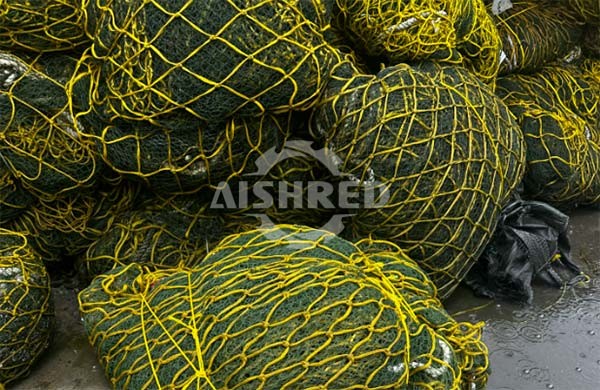
Waste fishing nets are one of the main sources of marine plastic pollution. These discarded nets are difficult to degrade naturally in the ocean, and they can also break down into microplastics that enter the food chain. From the perspectives of resource utilization and environmental protection, establishing a scientific and efficient fishing net recycling system has practical significance.
The main material of fishing nets is nylon (polyamide), which has high recycling value. At present, there are enterprises specializing in the acquisition and recycling of waste fishing nets, processing them into recycled nylon pellets or other products. In terms of market size, the global recycled nylon market was valued at approximately USD 1.301 billion in 2024 and is expected to reach USD 1.773 billion by 2031, with a compound annual growth rate of about 4.6%. The post-consumer recycled nylon market is projected to reach USD 703 million by 2032. Overall, nylon fishing net recycling has initially formed an industrial foundation, and the market space is still expanding.
Material Characteristics and Recycling Difficulties of Nylon Fishing Nets
The recycling of nylon fishing nets faces multiple technical challenges.
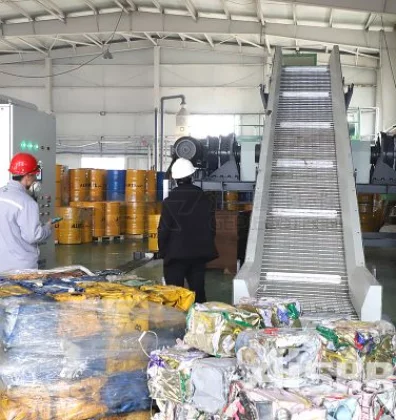
- High toughness and tangling: Nylon has high extensibility and flexibility. Fishing nets are usually in a tangled, bundled state during recycling, which can easily cause "slipping" or get wrapped around the rotor in the shredding chamber during the shredding process, leading to overload and machine shutdown.
- Contaminant adhesion: After long-term immersion in seawater, the surface and interior of fishing nets become attached with large amounts of sediment, aquatic plants, shells, algae, and other organic and inorganic substances. These contaminants need to be removed before or after shredding.
- Material property degradation: Nylon and other high-molecular polymers undergo molecular chain scission during both use and recycling, affecting the mechanical properties of the material. This means that the recycling process should minimize further damage to material properties.
The above characteristics determine that the shredding treatment of nylon fishing nets cannot use conventional plastic shredding equipment; instead, professional shredding equipment specifically designed for high-strength, high-toughness, and easily tangled materials is required.
GEP ECOTECH's Nylon Fishing Net Shredding Solution
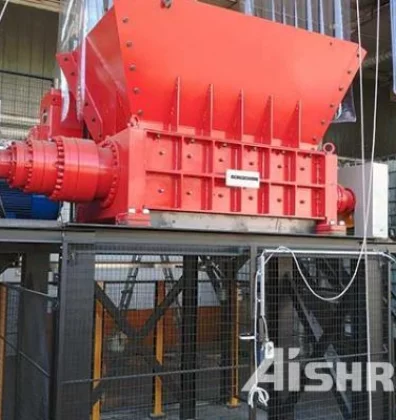
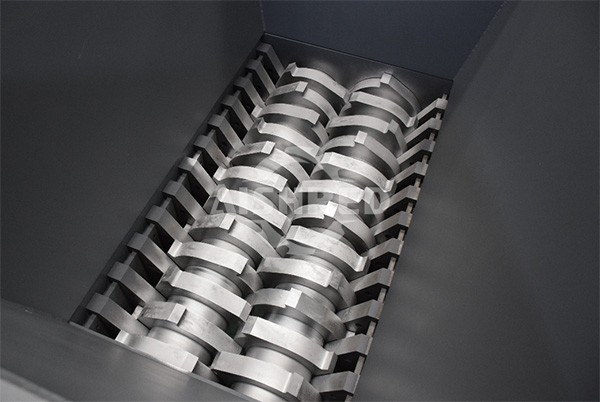
In response to the material characteristics of nylon fishing nets, GEP ECOTECH offers a two‑stage shredding solution consisting of a double‑shaft shredder and a single‑shaft shredder.
The double‑shaft shredder is suitable for primary shredding of high‑strength, easily tangled materials such as nylon fishing nets. It can adapt to materials of different shapes and sizes, with an output size ranging from 30 to 300 mm, and can be matched with subsequent processes such as washing, pelletizing, and fine shredding.
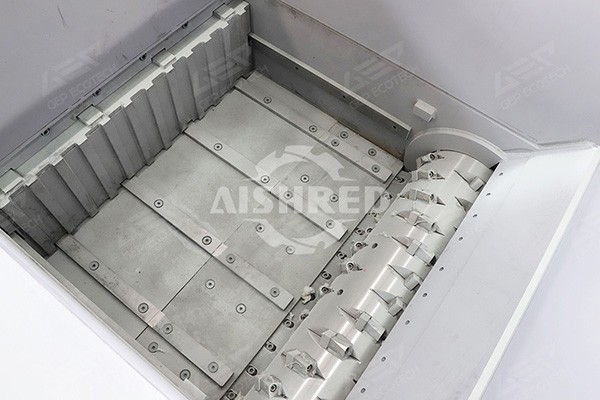
The pre-shredded material can be further processed by a single‑shaft shredder to achieve a more uniform output particle size. The single‑shaft shredder is equipped with the hydraulic pusher and screen, providing uniform and controllable output particle size. For recycling and pelletizing scenarios with high requirements for output particle size, the single‑shaft shredder is a necessary configuration.
Design and Quality Advantages of GEP ECOTECH Shredders
GEP ECOTECH's shredding equipment features the following characteristics in design and quality control, enabling it to handle the shredding of nylon fishing nets.
Customized cutter structure
The cutters of both the double‑shaft shredder and the single‑shaft shredder are made of CrNiMo high‑strength alloy steel, offering good impact resistance and high wear resistance, and are specifically designed for flexible plastic materials. Regarding the wear issue of cutters caused by nylon with fiber‑reinforced materials, the high‑wear‑resistance alloy steel cutters can effectively extend service life.
Anti‑winding technology
Both the double‑shaft and single‑shaft shredders adopt anti‑winding stationary cutter technology, effectively reducing downtime and equipment loss caused by material winding. This design is particularly important for processing easily tangled materials such as fishing nets.
Intelligent control system
The equipment is equipped with an intelligent control system that can monitor the operating status of the entire production line in real time, and supports functions such as automatic reversal, overload protection, and automatic lubrication, ensuring safe equipment operation.
Modular structure for easy maintenance
The double‑shaft shredder adopts an integral cutter box composed of upper and lower parts, which runs stably, is not easy to deform, and facilitates lifting for maintenance. The single‑shaft shredder is equipped with a hydraulic maintenance door and a modular screen, which can be opened easily for daily maintenance and quick cutter replacement.
Strict quality control
From innovative design concepts, carefully selected robust raw materials, to meticulous manufacturing processes, GEP ECOTECH ensures that its shredders have good performance and reliability.
GEP ECOTECH focuses on providing customized solutions for solid waste treatment and resource utilization. If you would like to learn more about nylon fishing net recycling lines or related shredding equipment, please feel free to contact us. Our sales team will provide selection recommendations based on your specific material conditions and processing requirements, and our engineering team can offer technical support from solution design to equipment installation and commissioning. We can also provide material testing services according to customer needs to verify the adaptability of the equipment to specific materials. GEP ECOTECH looks forward to cooperating with you to jointly promote the resource utilization of nylon fishing nets.