The traditional logic of construction waste resource utilization takes aggregate as the main line, and light materials are passively separated as "tailings," with low purity and narrow destinations, most of which can only be landfilled at low prices or paid to be sent to incineration plants. This pattern is being rewritten as alternative fuel expands on the demand side.
The demand for RDF/SRF as a substitute for fossil fuels is rising year by year. Europe remains the largest consumer market with mature pretreatment technology and carbon trading mechanisms, while the Asia-Pacific region leads in growth rate. The willingness of cement kilns, power plants, and district heating systems to purchase alternative fuels with stable calorific value provides structural support for the "fuelization" outlet of light materials. At present, the equipment and processes for separating fuelizable components from construction waste are in a period of demand expansion, rather than stock competition.
For customers evaluating projects, the key judgment is not whether to process light materials, but what process can purify light materials to the extent that end users are willing to purchase stably. Purity determines calorific value, calorific value determines selling price, and selling price determines whether the project can run.
Components and Recycling Value of Construction Waste Light Materials
Construction waste light materials are not a single material, but a collection of miscellaneous materials with low density and strong combustibility. Typical components include plastic film, woven bags, foam boards, wood chips, paper, textiles, leather, rubber, and a small amount of wood. In decoration waste, light materials usually account for 10%–20%; in demolition waste, about 5%–15%. In decoration waste scenarios, the actual enrichment degree of combustible components such as plastics, textiles, and foam is higher.
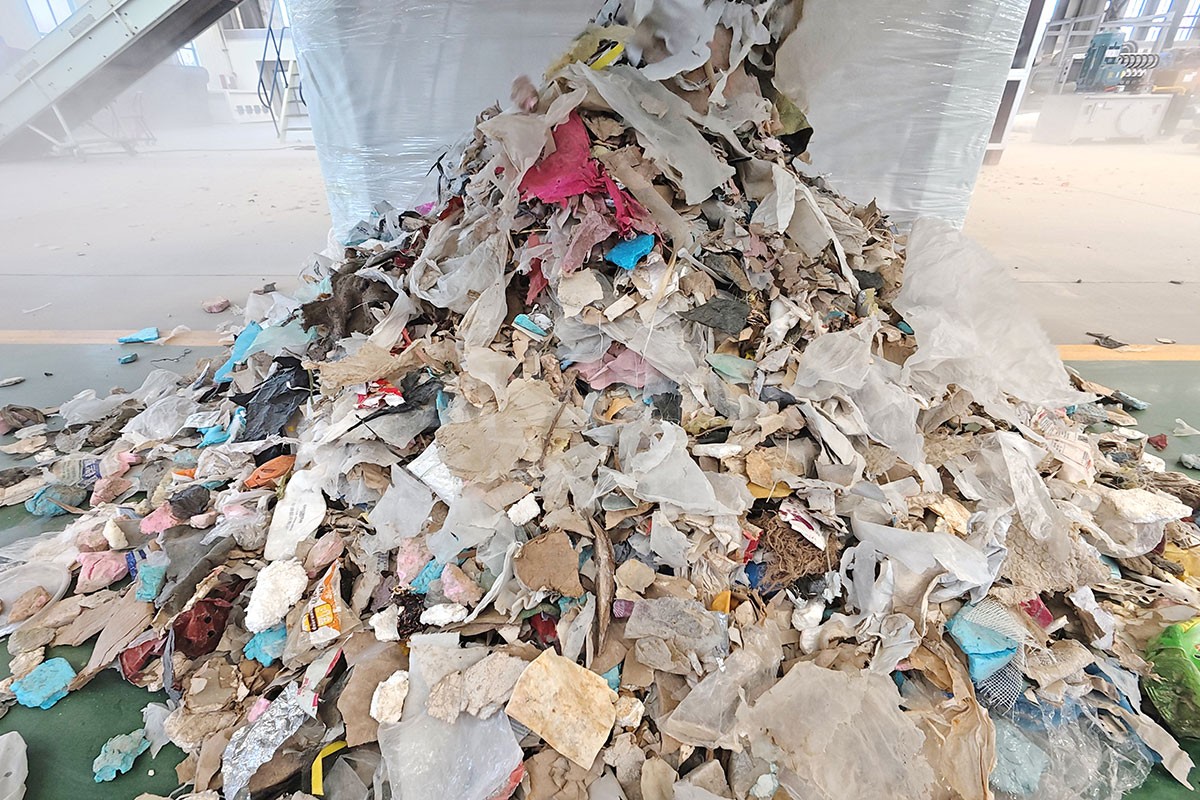
The value of these materials is not at the recycled material level, but in calorific value. The calorific value of plastics and rubber is close to that of coal, wood is about 4000 kcal/kg, and textiles, paper, and foam also have good combustion performance. After standardized sorting, lightweight materials prepared into RDF/SRF can reach a calorific value of 3,500–6,000 kcal/kg, close to that of coal. The product calorific value of mature projects is usually stable in the range of 4,000–5,000 kcal/kg, and after shredding, it is can be directly supplied to cement kilns or power plants as alternative fuel.
Environmental benefits are also quantifiable: for every 10,000 tons of light materials processed into alternative fuel, about 4,000 tons of standard coal can be replaced, about 12,000 tons of carbon dioxide emissions can be reduced, and about 1.5 mu of landfill land can be released. In a market environment with tightening carbon constraints, this part of emission reduction may also form additional benefits through carbon allowances or alternative fuel emission reduction transactions.
GEP ECOTECH Construction Waste Light Material Recycling Line
GEP ECOTECH's construction waste light material recycling line makes subtraction at every stage, separating impurities that should not enter the fuel and have recycling value as early and as thoroughly as possible, thereby reducing the burden of the second shredding stage and improving the output efficiency of the whole line. The equipment combination and material flow of the whole line are as follows.
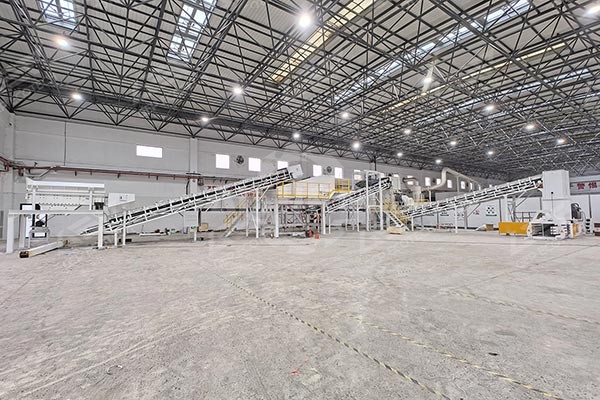
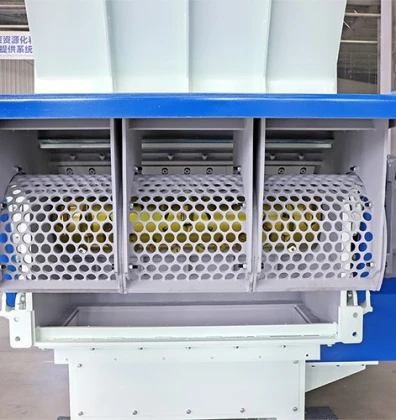
Double-shaft shredder: pre-shredding and shredding apart
Native light materials often contain clustered plastic film, woven bags, foam blocks, and textiles. When directly screened or wind shifted, the materials move in clumps, and sorting accuracy drops significantly. The double-shaft shredder uses low-speed and high-torque shearing action to shred the materials apart, shred bags open, and shred for volume reduction, processing irregular large clumps into relatively uniform-sized pieces, creating a stable material form for subsequent screening and wind shifting.
Trommel screen: reduction and diversion
The shredded materials enter the trommel screen. The undersize is mainly fine soil, dust, and small-particle inert materials, which directly leave the main process and reduce the ineffective load of subsequent equipment; the oversize enters the next stage. At this position, the role of the trommel screen is not only to "screen out fine materials," but more importantly to reorganize the material flow by particle size, making the material layer thickness entering wind shifting more controllable and avoiding wind shifter airflow short-circuiting caused by fine material clogging or large-block bridging.
Magnetic separator: protecting downstream and improving purity
The oversize passes through a suspended or drum-type magnetic separator during conveying, and iron nails, iron wires, and metal fragments are removed. This step has a dual meaning in the process: if iron pieces enter the wind shifter, they will disturb the airflow field; if they enter the single-shaft shredder, they will cause cutters wear or wrap around the shaft; magnetic separation in advance both protects the core shredding equipment and reduces metal residue in the fuel product.
Wind shifter: the precision of light/heavy separation determines the value of the line
The de-ironed materials enter the wind shifter. The wind shifter uses the difference in suspension velocity of light and heavy materials in the airflow to separate light materials such as plastics, foam, textiles, and wood chips from heavy inert materials such as bricks, concrete fragments, and glass. Light materials enter the single-shaft shredder, and heavy materials are discharged for separate disposal. Wind shifting is the gatekeeping stage for fuel purity in the whole line: the higher the purity of light materials, the more stable the calorific value of the product after single-shaft shredding, and the higher the acceptance by end users; the less combustible material entrained in heavy materials, the smaller the loss on the aggregate side or landfill side.
Single-shaft shredder: fine shredding and homogenization
The light materials purified by wind shifting enter the single-shaft shredder for fine shredding. Single-shaft high-speed cutting targeted shredding against the winding property of waste textiles, the toughness of wood, and the hardness of plastics. The discharge particle size is controlled by the screen, and the uniformity is significantly better than that of materials that have only undergone double-shaft coarse shredding. The final product is RDF/SRF feedstock with uniform particle size and controllable purity, which can be directly baled for shipment or further briquetted.
Construction waste light materials from different sources vary greatly in composition: decoration waste has a high proportion of plastics and textiles, demolition waste has a larger proportion of wood, and moisture content also differs significantly by region. GEP ECOTECH's equipment configuration is not a fixed template; wind shifter air volume, trommel screen apertures, and single-shaft screen mesh can all be adjusted according to incoming material characteristics; the whole line can be modularly adapted to different material characteristics and capacity ranges, with capacity covering different levels from several tons per hour to large-scale fixed lines, meeting the different needs of different projects.
Why Choose GEP ECOTECH
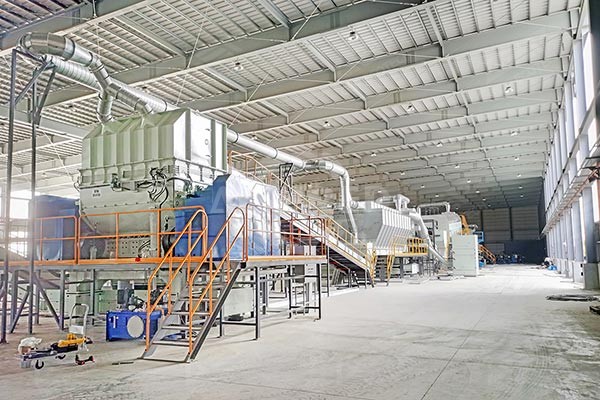
Materials from different sources differ significantly in composition, moisture content, and winding properties. GEP ECOTECH intervenes in material analysis and capacity planning at the pre-sales stage, configuring equipment models and process parameters according to the customer's actual incoming material characteristics: after the project enters the engineering stage, deviations between site conditions and preliminary planning are almost inevitable; when the factory layout needs to be adjusted multiple times according to the actual site, GEP ECOTECH's sales and technical personnel will cooperate throughout the process and complete material trial runs and plan adjustments according to customer requirements; in terms of after-sales service, GEP ECOTECH provides full-cycle after-sales support covering installation and commissioning, operation training, spare parts supply, and remote diagnosis, to ensure that the production line ultimately operates stably and efficiently.
GEP ECOTECH has delivered more than 500 waste recycling projects worldwide. In the direction of construction waste light material recycling and alternative fuel production, we has accumulated rich experience and project cases. The material data, commissioning experience, and equipment adaptation strategies accumulated from these projects will directly enter the scheme design of new projects, rather than starting trial and error from zero.
Project cases for your reference:
If your team is evaluating a construction waste light material to RDF/SRF project, or is looking for an upgrade path for high-value utilization of lightweight materials for an existing aggregate line, you are welcome to contact the GEP ECOTECH team. We can provide customized solutions from single-machine configuration to whole-line design based on your material characteristics and target capacity, and share operating data and project experience under similar material conditions, helping you see the process route clearly and calculate the economic account clearly before investment decision.