Recently, geopolitical tensions in the Middle East have triggered global concerns over oil supply. The high-level fluctuations in oil prices are profoundly affecting the tire industry, which is closely linked to petroleum, through the industrial chain. As a supplier of tire resourceization solutions and equipment, GEP ECOTECH observes that this change is bringing a new market environment to the waste tire treatment industry. For purchasers considering entering or expanding in this field, understanding the current changes may help you take the first step more steadily.
What Changes Are Happening in the Market?
As a core raw material for tire manufacturing (synthetic rubber, carbon black, etc., all originate from petroleum), fluctuations in oil prices directly transmit to the tire value chain. Rising production costs for new tires lead to higher prices. This phenomenon has two direct impacts on the waste tire recycling market:
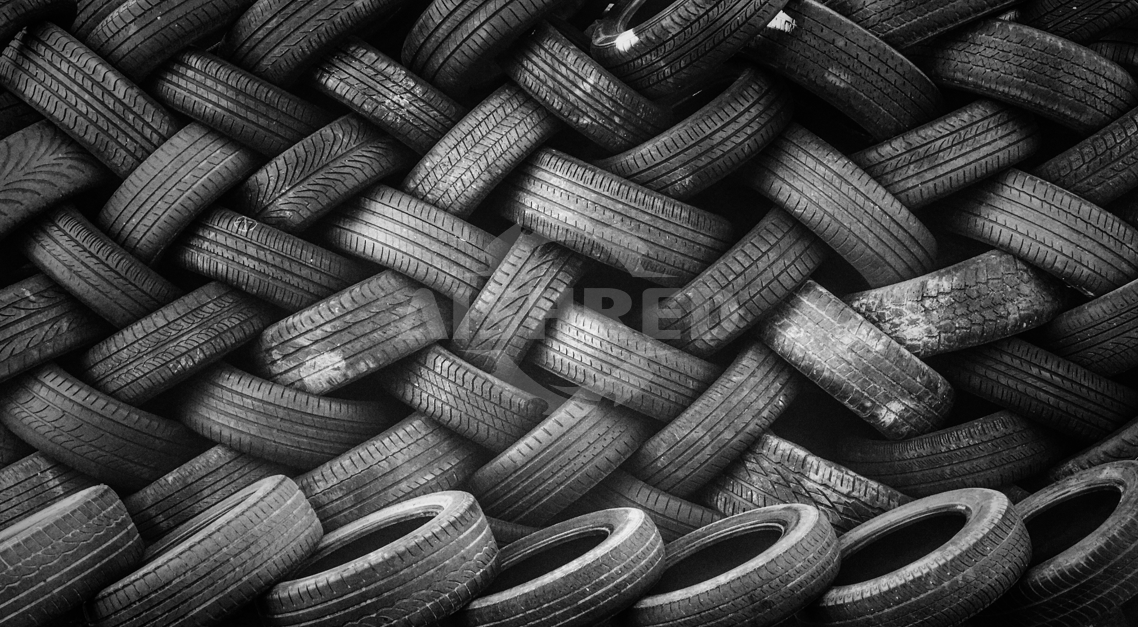
The "resource attribute" of waste tires is enhanced: The more expensive new tires become, the more prominent the value of replacing them through retreading or regeneration. This directly drives up the recycling price of waste tires, especially retreadable truck and bus tires. In the past few years, the purchase price of high-quality scrap tires has been rising, a trend that is supported under the current oil price environment.
Price linkage of recycled products: The pyrolysis oil produced from waste tire pyrolysis is highly correlated in price with diesel and fuel oil. When oil prices rise, the selling price of pyrolysis oil also increases, which to some extent improves the profit margin of the downstream processing stage.
Several Suggestions for Those Planning to Enter the Industry
In such a market environment, newcomers no longer face the extensive phase where "having equipment guarantees profits." Based on our years of experience serving domestic and international clients, we suggest you focus on the following aspects before making a decision:
Address the Owner's Core Pain Points: Stable Raw Materials and Product Off-Take
Currently, practitioners are most concerned not with "whether it can be processed," but with "where the raw materials come from and where the products go."
Raw material side: Waste tire prices are high and fluctuate frequently. The ability to establish a stable recycling channel with controllable prices determines production costs. The root cause of many project failures lies in "insufficient feed" or "high-cost feed."
Product side: Simple sales of pyrolysis oil or rubber powder offer low added value and their prices are subject to downstream buyers. How to further process products (such as rubber powder and pyrolytic carbon black) to find more stable, higher-value application scenarios is key to project profitability.
Equipment Selection: From "Operational" to "Stable, Environmentally Friendly, and High-Profit"
Equipment serves as a tool to address the above pain points. When selecting equipment, we suggest focusing your evaluation on the following three dimensions:
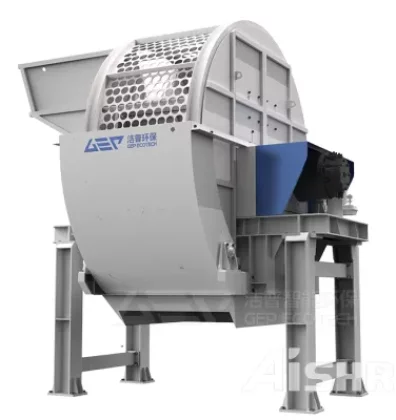
- Capacity for continuous production: Intermittent, small-scale equipment is no longer suited to current environmental requirements and market competition. Choosing complete equipment capable of continuous and stable operation is the foundation for reducing unit costs and ensuring production capacity. GEP ECOTECH's tire double-shaft shredder, as part of the front-end shredding process, emphasizes continuous and stable operation under complex material conditions, providing uniform material assurance for subsequent processes.
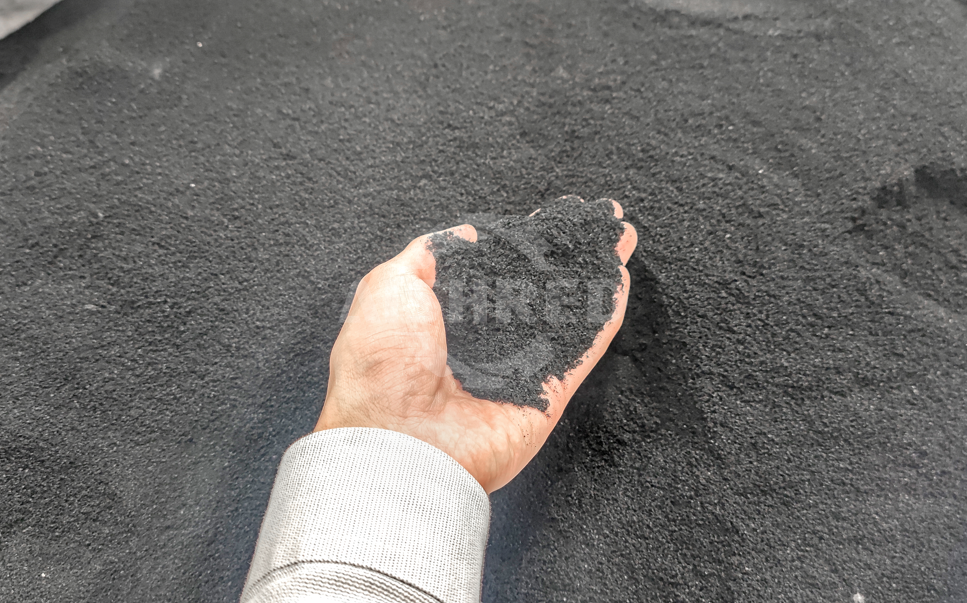
- Value of fine sorting: The value of waste tire processing largely depends on how finely the sorting is performed. GEP ECOTECH's rubber grinder can process tire rubber blocks into particles below 10mm, achieving complete separation of rubber and metal. The higher the purity of the rubber powder, the greater its value as a recycled raw material. For instance, GEP ECOTECH's bidirectional tire bead wirepuller completely extracts the bead wire. This not only reduces wear on the double-shaft shredder's movable cutters, improving primary shredding and grinding efficiency, but the extracted wire, as clean scrap steel, also constitutes an important source of income.
- Controllability of product quality: For customers planning to produce fine rubber powder, the grinding temperature control and particle size uniformity of the tire rubber grinder directly determine the market price of the rubber powder. Rubber powder with stable quality can be used to manufacture high-quality reclaimed rubber, modified asphalt, and even sports tracks, offering profit margins far higher than mixed rubber powder.
How Can GEP ECOTECH Support You?
Based on our understanding of the aforementioned market changes and owner pain points, our role is not only as an equipment seller but also as a process consultant in the initial stages of your project. Within our equipment portfolio:
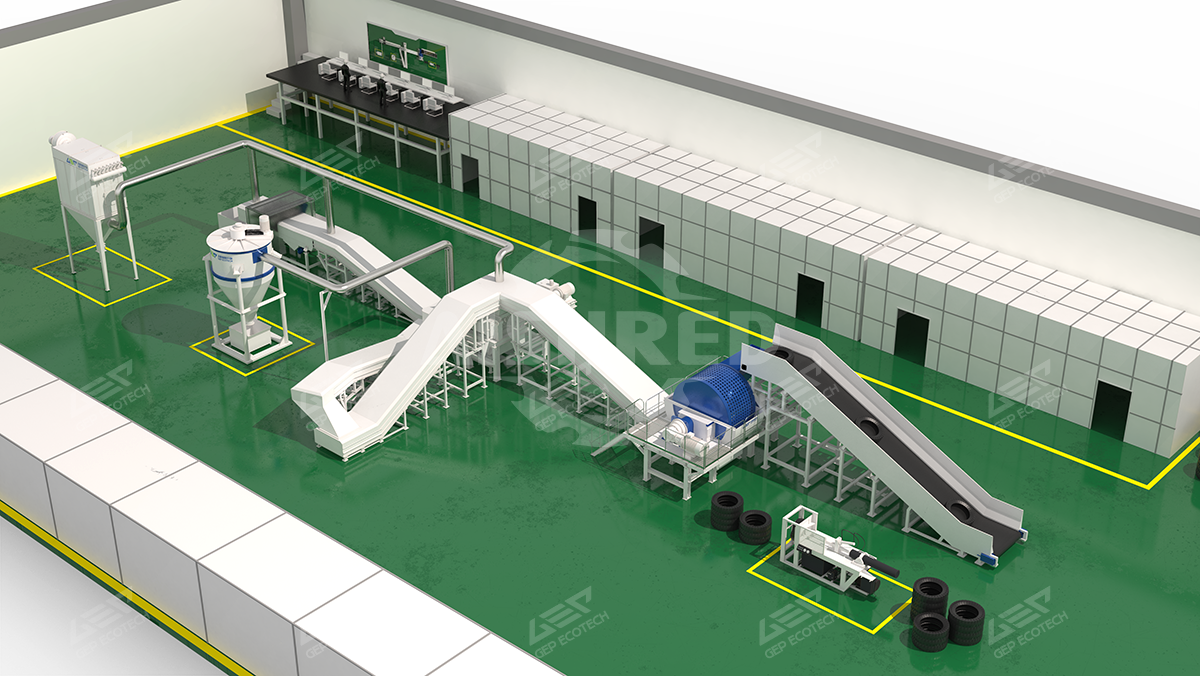
- For raw material pretreatment: Our double-shaft tire shredder, along with a roller screen or integrated with a trommel screen, efficiently processes various specifications of waste tires, achieving uniform sized rubber chips (around 50mm), which can be used TDF (Tire-Derived Fuel), providing high-quality material basis for your downstream processing.
- For product refinement: The utilization of the rubber grinder aims to help you upgrade products from low-value mixed materials to clean rubber granules, rubber powder or steel wire with clear market pricing, thereby broadening your sales channels.
- For the overall project: Based on your raw material sources, target products, and the environmental requirements of your location, we can provide process recommendations for the entire process, from shredding and sorting to grinding. This helps you consider future continuous production efficiency and product quality already during the equipment selection phase.
The market volatility brought about by the Middle East situation is accelerating the survival-of-the-fittest process in the tire recycling industry. For newcomers, this represents both an opportunity and a test of project operation capability. Shifting focus from simply purchasing equipment to building stable raw material channels, selecting reliable process equipment, and planning for high-value-added product off-take might be a more prudent way to enter the market under the current environment. If you are evaluating related projects, GEP ECOTECH is willing to provide equipment selection references based on actual operating conditions.