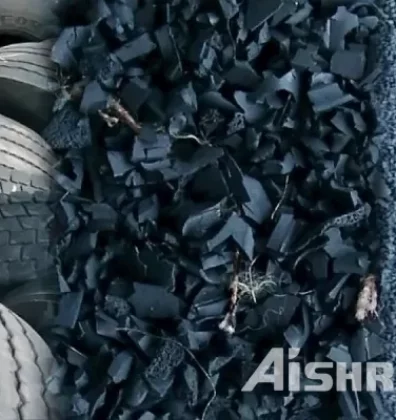
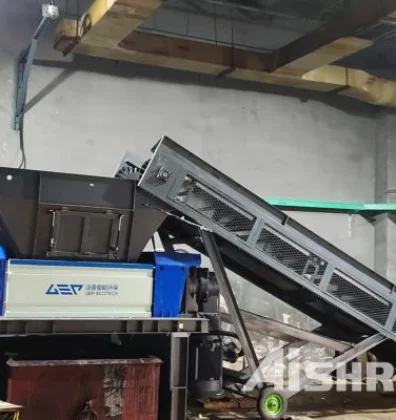
With the rapid growth of global wind power installations, an increasing number of wind turbine blades are entering their retirement cycle. Over the next decade, retired wind turbine blades will face a peak period of centralized disposal. As blades are made of high-strength composite materials, traditional landfill and incineration methods can no longer meet environmental protection and resource recycling requirements. Addressing industry challenges such as "difficult cutting, difficult transportation, difficult shredding, and difficult utilization" of wind turbine blades, GEP ECOTECH has launched a comprehensive pretreatment solution for wind turbine blade shredding, achieving integrated processing from dismantling, shredding, sorting to downstream utilization, promoting resource recycling.
Main Composition of Wind Turbine Blades
Wind turbine blades are typically manufactured using fiber glass reinforced plastic (GFRP) composites, featuring light weight, high strength, and corrosion resistance, with a conventional service life of approximately 20 to 25 years.
Main Material Composition of Wind Turbine Blades:
| Material Composition | Proportion (Reference) | Characteristics |
|---|---|---|
| Glass Fiber (GF) | 50%–70% | High strength, corrosion resistant |
| Epoxy Resin / Unsaturated Polyester Resin | 20%–35% | Bonding and curing function |
| Balsa Wood / PVC Foam | 5%–15% | Lightweight sandwich structure |
| Carbon Fiber (some blades) | 1%–5% | Enhances rigidity and strength |
| Metal Connectors | Small amount | Flanges, bolts, etc. |
As these are typical thermosetting composite materials, they cannot be melted and recycled like ordinary plastics. Therefore, shredding for resource recovery has become the mainstream technical route.
Challenges in Disposing of Wind Turbine Blades
Retired wind turbine blades have the following typical characteristics:
- Length can reach 30–100 meters
- Strong glass fiber toughness
- Good wear resistance due to resin content
- High transportation costs
- Conventional equipment struggles with continuous stable shredding
- High standards for dust and fiber treatment
Therefore, specialized heavy-duty shredding systems are required for processing.
GEP ECOTECH Wind Turbine Blade Shredding Process
Pretreatment process for waste wind turbine blades: "Dismantling → Shearing → Primary Shredding → Fine Shredding → Sorting → Resource Utilization,"detailed as follows:
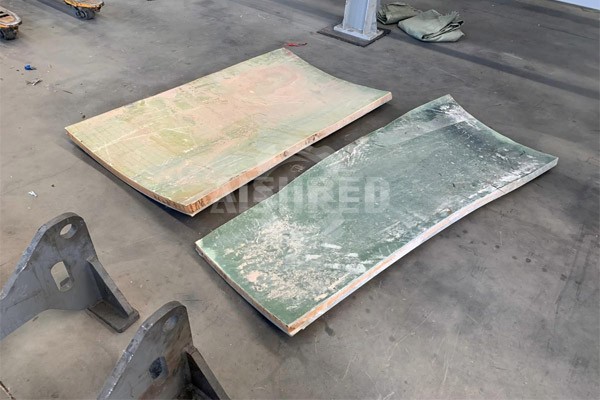
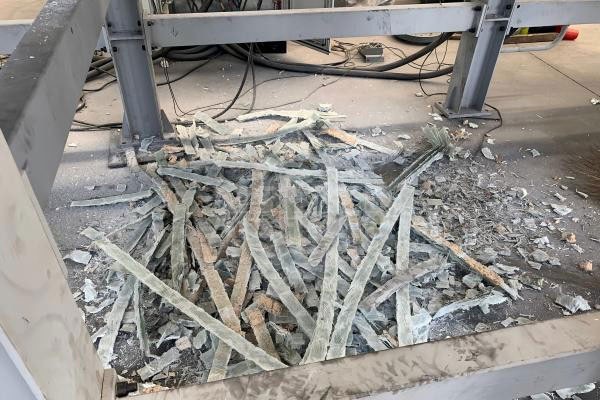
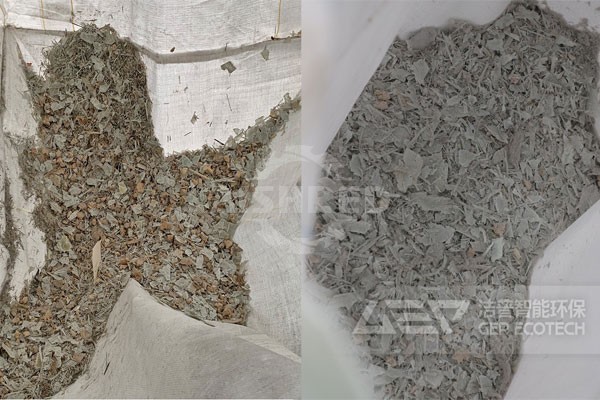
On-site Dismantling and Cutting
Retired blades are first cut into sections using hydraulic shears, diamond wire saws, and other equipment to facilitate transportation and feeding.
Dual-Shaft Shredder for Primary Shredding
A large dual-shaft shredder performs low-speed, high-torque shredding on the blades for initial volume reduction.
Features:
- Excellent anti-winding performance
- High-wear-resistant cutter configuration
- Suitable for processing high-fiber materials
- Stable and continuous operation
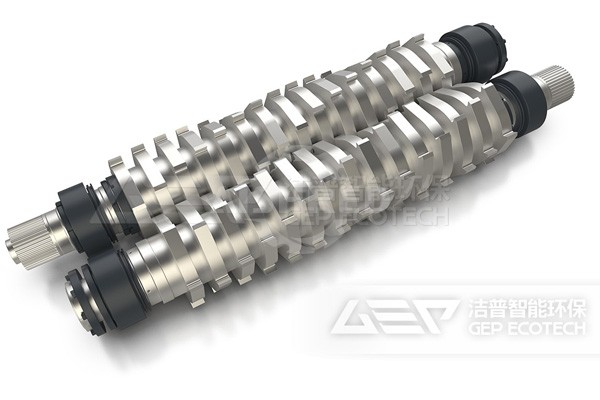
Single-Shaft or Four-Shaft Fine Shredding
Further processes the material to below 20–50 mm size specifications to meet downstream utilization requirements.
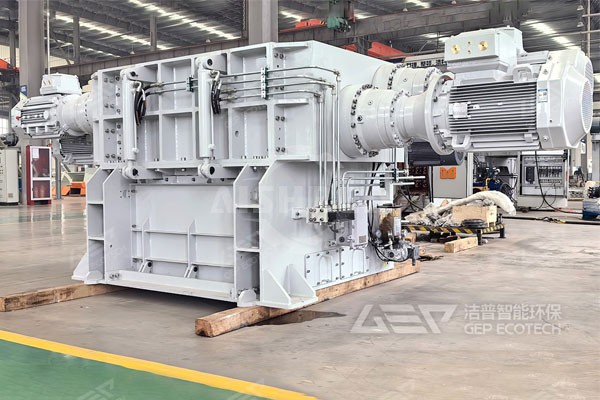
Magnetic Separation and Air Classification
Removes metal impurities and separates light and heavy fractions.
Dust Collection System
Equipped with pulse dust collection and negative pressure systems to reduce glass fiber dust pollution.
Downstream Resource Utilization Directions for Wind Turbine Blades
After shredding, blade materials can be utilized in various resource recovery applications.
Co-processing in Cement Kilns (Current Mainstream Direction)
The shredded glass fiber and resin mixture can serve as:
- Alternative fuel (resin provides calorific value)
- Alternative raw material (glass fiber contains silicon and calcium components)
Advantages:
- Large processing capacity
- Mature and stable application
- No secondary residue generated
This is currently a well-established resource recovery path for blades both domestically and internationally.
RDF (Refuse-Derived Fuel) / SRF (Solid Recovered Fuel)
The resin portion of the blades has high calorific value. After fine shredding, it can be used to produce:
- RDF fuel
- SRF alternative fuel
Applications include:
- Cement plants
- Industrial boilers
- Combined heat and power projects
Effectively replacing part of the coal resources.
Recycled Glass Fiber Materials
Through further separation processing, glass fiber powder can be obtained for use in:
- Construction reinforcement materials
- Composite panels
- Filler materials
- Artificial stone
Enhancing the value of waste composite materials.
Pyrolysis Recovery
Using pyrolysis technology, the following can be recovered:
- Pyrolysis oil
- Combustible gas
- Recycled fibers
Suitable for high-value-added recovery directions.
Building Material Utilization
Shredded blade particles can be used for:
- Road base materials
- Cement products
- Construction fillers
- Lightweight wall materials
Achieving solid waste building materialization.
Advantages of GEP ECOTECH Equipment
- High-Strength Heavy-Duty Design: Specially optimized for glass fiber composite materials with outstanding wear resistance.
- Intelligent Control System: PLC automatic control, supporting remote monitoring and management.
- Modular Complete Line Solution: Flexible configuration combinations based on customer production capacity requirements.
- Environmentally Friendly and Low Energy Consumption: The entire line is equipped with dust and noise reduction systems, meeting environmental compliance standards.
- Rich Project Experience: Widely applied in fields such as wind turbine blades, FRP, bulky waste, industrial solid waste, and RDF fuel preparation.
Driven by the "dual carbon" goals, the wind power industry is transitioning from "green power generation" to "full lifecycle green recycling." Retired blades are no longer "hard-to-treat waste" but important resources for sustainable circular utilization.